A good kart test day has a written plan: a baseline run, then one change per run, with the same driver and the same number of laps each time, and the baseline repeated at least once to show how much the track has moved. Log the change and the result straight after each run. That’s what lets you say, at the end of the day, which change helped.
The common mistake is the opposite: lots of changes, no baseline, and a notebook that says “felt better”. This post sets out a plan you can adapt for your chassis, class and track.
What should you decide before you get to the track?
Write down what you’re testing, in priority order, and what a good answer looks like. A forum advice thread on KartPulse and several coaching sites make the same point: have a plan before you arrive. A short pre-test list:
- One question per test. For example, “does a tooth more on the rear sprocket help us on the exit of the last corner?” Vague aims like “find some pace” lead to random changes.
- A baseline. Your chassis manufacturer’s recommended setup, or your last known-good sheet for this track and class. Photograph it and note every measurement so you can get back to it. If you don’t have a sheet layout yet, see our setup sheet guide.
- Fixed rules for the day. Same driver, same tyre type, a set number of laps per run. Say so up front, because it’s easy to drift on the day.
- The tools to measure. Timer or lap beacon, a tyre pressure gauge, a thermometer if you want air and track temperature, and your logging method.
Why change only one thing per run?
Because you can’t separate two changes made together. If you alter the rear sprocket, the axle and the pressures in one go and the kart is quicker, you’ve learned that the combination worked, not which part did. Kartclass puts it directly: make one change at a time rather than two together in one setup.
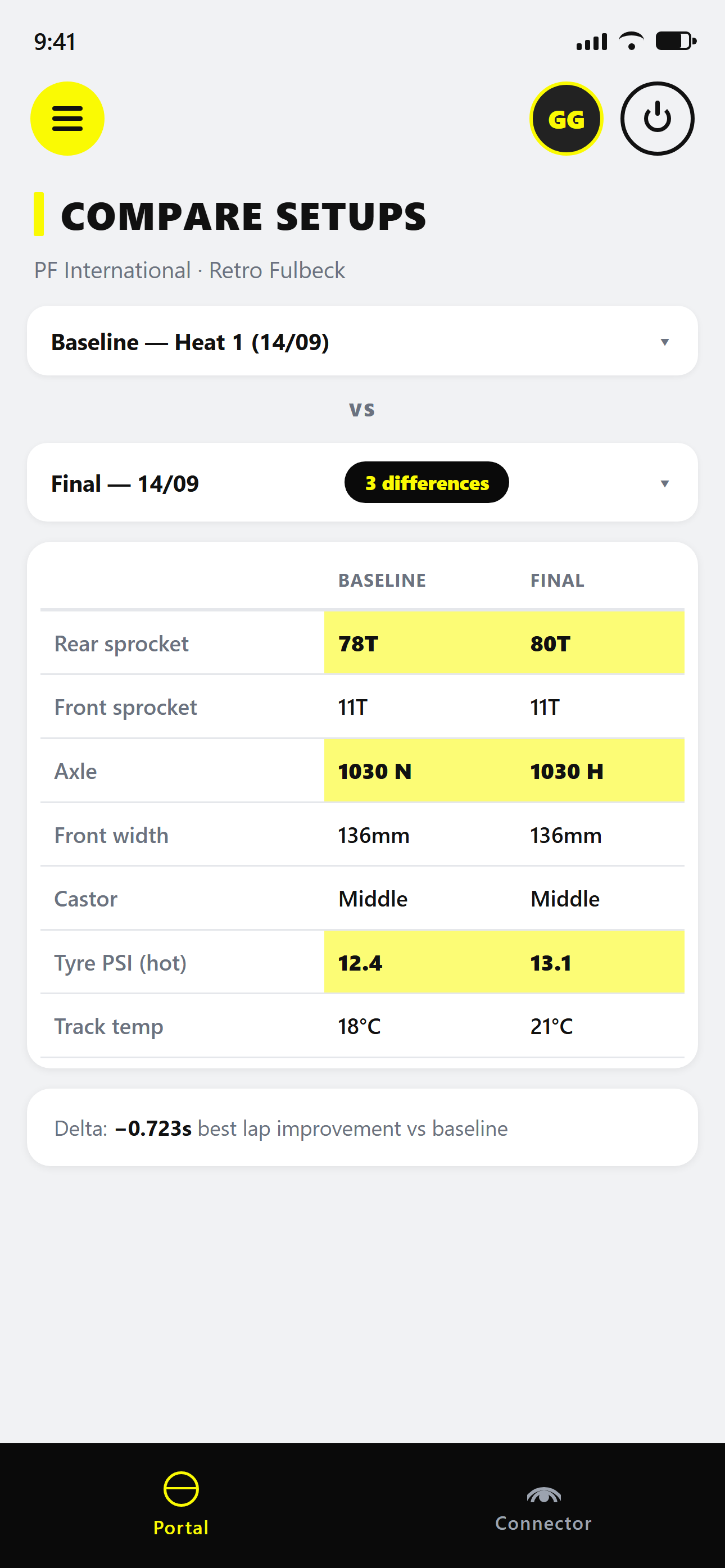
The screenshot below is a real example of why. It shows a baseline and a final session with three differences: rear sprocket, axle and hot tyre pressure. The session was 0.723 s quicker, but it’s impossible to say how much each change contributed, and the track temperature also rose by three degrees between the two.
If you do end up with a stack of changes, don’t throw them away. Treat it as a new baseline and then test each one in turn, backing them out one at a time if you have time.
How should you structure the runs?
Use the same run length every time and put the baseline in more than once. A simple pattern is below.
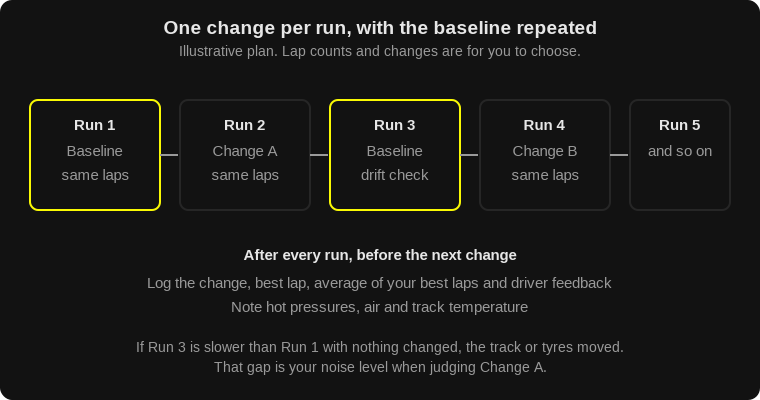
- Run 1: baseline. Run enough laps for the tyres to come in and your times to settle. Note best lap and the average of your best few. One coaching drill suggests around ten laps in baseline trim, then in to change one thing and back out, which is a reasonable starting point if you have nothing better.
- Run 2: change A. Same laps, same driver, same approach. These laps don’t need to be maximum push, but they do need to be repeatable.
- Run 3: baseline again. This is the check people skip. If the baseline is now slower or quicker with nothing touched, the track or tyres have moved, and that movement is the noise you must beat to trust Change A.
- Run 4 onwards: change B, and so on, returning to a baseline or the best-so-far every few runs.
On a short test, a repeat of the baseline costs you one run but protects every conclusion you draw after it.
What order should you test things in?
Start with changes that are quick, reversible and likely to matter, and leave fine adjustments until the kart is close. Kartclass notes there is a logical order, based on the kart’s baseline setup: for example, if your chassis normally runs its standard axle, your first changes probably wouldn’t be axles. It also warns against spending a day on fine adjustments while still half a second off.
One sensible example is gearing and pressures first, then seat and ballast, then chassis items such as axle, track width and front end. That’s a starting point to adapt, not a rule, and your chassis manual and coach know better. If you want the detail on each area, we have posts on tyre pressures, gearing, axle stiffness and front end setup.
What should you record after each run?
Record it while it’s fresh, before the next change. The minimum I’d keep:
- What you changed, from what to what, and why
- Best lap and the average of your best few laps
- Hot tyre pressures straight off the track
- Air and track temperature, and whether the track is drying, rubbering in or tiring
- Driver feedback in plain words: where it understeers, where the rear steps out, what feels better or worse
- Whether you’d keep it, back it out, or test it again
Note the changes that made the kart slower too. They stop you trying the same thing again in six months.
What does this look like in KartSetups?
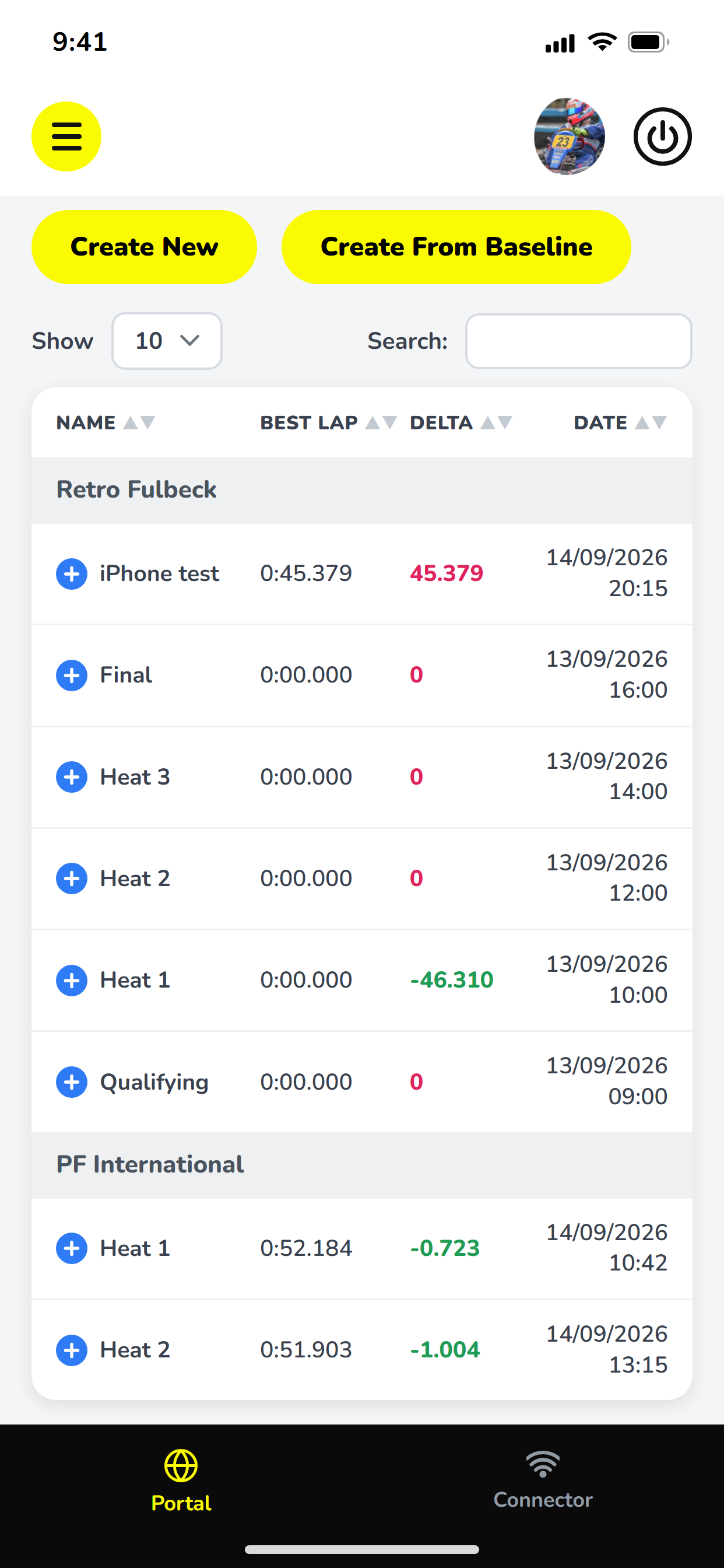
Each run is a session with its own setup. You mark your baseline session, then use Create From Baseline to start the next session from it, so you only need to edit the one thing you’re testing. The sessions list shows best lap and the delta against the previous session, and Compare Setups highlights the values that differ between any two. The release notes list setup change attribution, which shows the changes made between consecutive sessions alongside the lap time delta.
If you also use GPS or lap data, karting data analysis covers how to read it once the testing is done.
What should you do at the end of the day?
Pick the keepers and write them up before you pack the van. Decide what the new baseline is, list the changes you rejected and why, and note the one or two you’d test next time. A test day you can’t remember in a month’s time wasn’t much of a test. If you’d like your results in one searchable history rather than a notebook, see pricing and features and try KartSetups free.