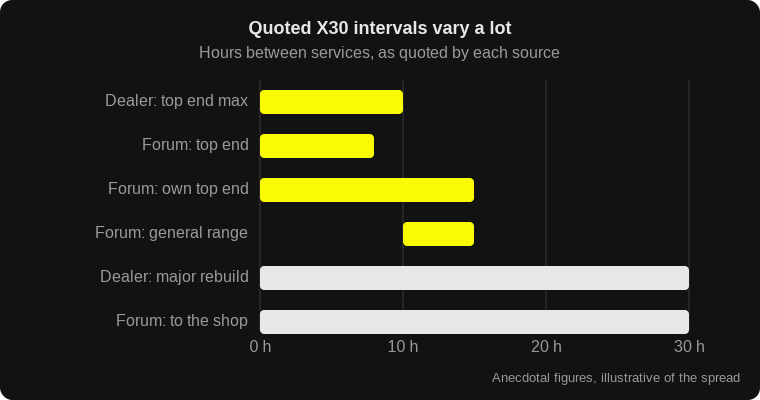
There is no single correct rebuild interval for a kart engine. Published figures for a two-stroke top end run from roughly 8 to 15 hours, with a major rebuild at around 30 hours for an IAME X30, and they differ by engine, tune and how hard it is run. The reliable approach is to take the manufacturer’s service figure as a ceiling, log every hour of running against each engine, and bring a rebuild forward when the engine tells you it needs one.
How often should you rebuild a kart engine?
Sources disagree, and the honest answer is a range. Western Australian dealer Veloce Kart’s X30 service guide says the engine should not exceed 10 hours before a top end rebuild and 30 hours before a major rebuild. Forum users on KartPulse quote 8 hours for a top end, or 15 hours with a trip to the shop at 30. The original poster there had read 10 to 15 hours.
For other engines the picture is murkier. One forum poster says a Rotax “goes forever on the top end”, and another reports Rotax engines with 60 to 70 hours and no rebuild sounding terrible. Neither is a service figure. For Rotax, IAME or any other engine, the numbers that count are in the manufacturer’s manual and your series regulations, which we can’t summarise for you.
What is the difference between a top end and a major rebuild?
A top end is the quick, cheaper job on the cylinder side, and a major rebuild adds the crankcase side. The dealer guide lists the top end as piston and rings, small end bearing, piston pin, O-rings and gaskets. A major rebuild is that plus the con-rod, big end bearing, crankpin, thrust washers, main bearings and seals.
Other parts have their own, shorter cycles. The same guide suggests carburettor diaphragms in a basic service every few meetings, checking reed valves periodically as they can chip or break, and servicing the clutch whenever the front sprocket changes. If you are weighing up which jobs to do yourself, our race day checklist post is a good place for the quick checks.
What are the signs an engine needs rebuilding sooner?
Sound, power and leak-down are the three signs engine people mention, and none of them is a number you can read off a lap chart. Forum users describe a worn Rotax as sounding like “a washing machine full of bricks”. Top teams want engines that still pull as hard as possible, so power fading against a fresh engine is a reason to rebuild before the hours are up. One poster also suggests a leak-down test to decide when head and valve work is worth doing, though without a wear threshold.
Lap time is a poor early warning on its own, because track temperature, tyres and driving swing it by more than a worn ring will. A repeatable comparison helps more. Our data analysis post covers comparing runs, and the trap is the same: only compare like with like.
How do you stop it being guesswork?
Count running time against each engine, not against the kart. Engines move between karts and drivers, and the interval belongs to the engine. A simple routine:
- Give every engine an ID and write down the date and type of its last rebuild (top end or major).
- Add the hours or sessions to that engine after every outing, however short.
- Set your own interval with a margin under the manufacturer’s ceiling, and note why.
- After a rebuild, reset the count and keep a note of what was replaced.
- If an engine feels flat before its interval, record that too, so you build up your own evidence of when yours actually fade.
In KartSetups, engines log their own usage from saved sessions. The Maintenance page shows rebuild intervals as progress bars with OK, Due soon and Overdue statuses, split into top end and bottom end, and you can set alerts so you hear about it before race day. The release notes list the current maintenance features.
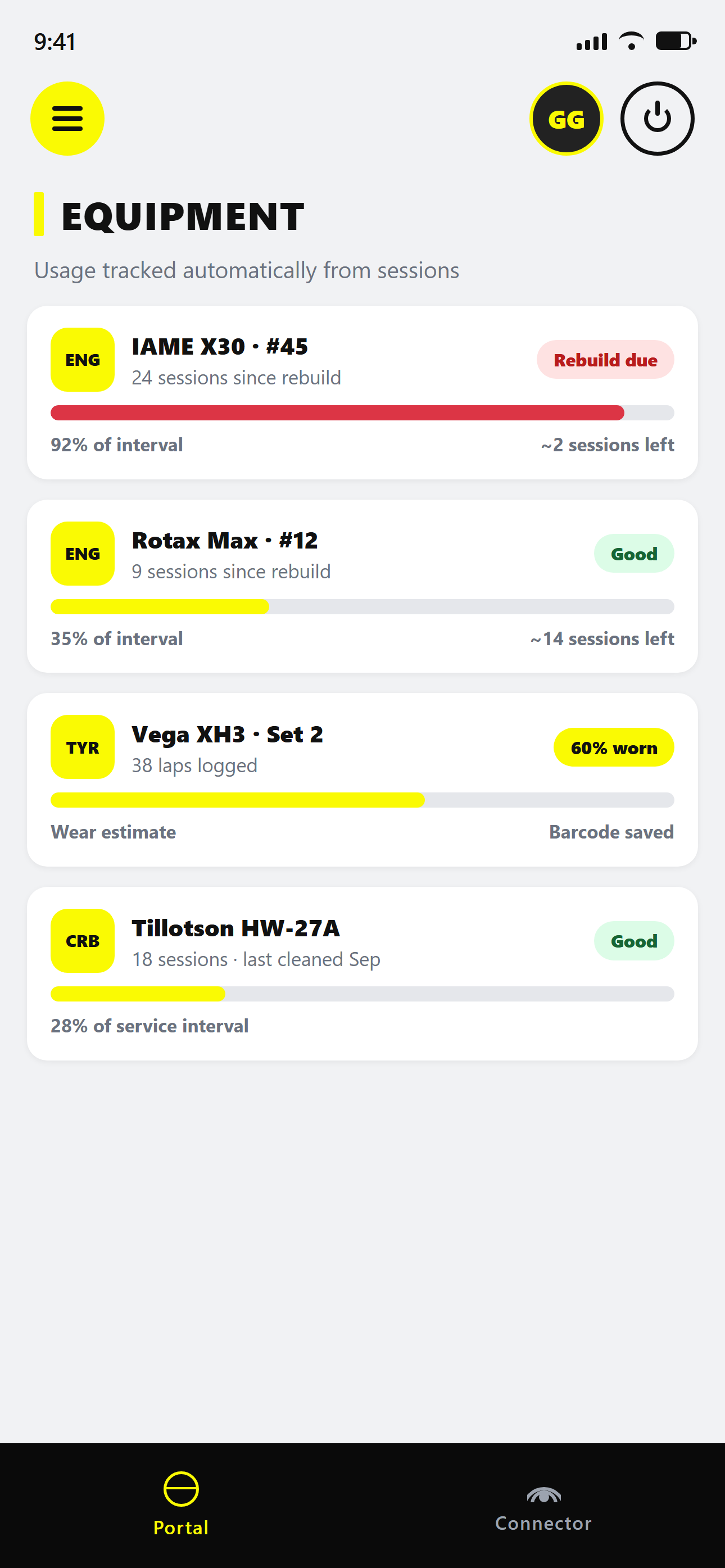
If a workshop does the rebuilds, job cards can plan the work, and completing a job linked to an engine or carb can log the rebuild so the count resets. Our gearing post covers logging the other changes you make around it.
What should you do next?
Look up your engine’s official service guidance, decide on a conservative interval, and start logging hours against each engine this week. A written count beats memory every time, and after a season you will know what your engines really do.